How New Light Fixtures Improve Energy Efficiency
In these uncertain times of high energy costs and availability, who isn’t looking for ways to increase energy efficiency? The federal Office of Energy Efficiency and Renewable Energy, or EERE, estimates that it costs the average U.S. household nearly $2,000 annually to provide their heating, cooling and other energy needs.
We’ve all heard the usual recommendations to conserve energy. “Turn off the lights when you leave the room” is a no-brainer. There are, however, other common-sense approaches to energy conservation, such as installing new light fixtures. Yes, updating your lighting can result in significant energy conservation and much-desired lower energy costs.
When we consider updating our homes to conserve energy, we usually think about installing new windows or doors or adding insulation. We think that lighting is all about aesthetics and relegate updating it to the back burner. Sure, new lighting can be pleasing to the eye, but it can also be a major factor in reducing energy consumption.
Thanks to ever-evolving technology, today’s lighting is more energy efficient than ever before. Consider that fewer than two centuries ago fire and oil were the main sources of home lighting. With the invention of the incandescent bulb in the 1800s, the American lifestyle dramatically changed.
LED Technology = Energy Savings
Enter LED technology into the picture. Introduced in the early 1960s, LED, or light emitting diode lighting offers several energy-efficient advantages over traditional lighting. Did you know that an incandescent bulb uses nearly 90 percent more energy than a comparable LED bulb? An incandescent bulb emits up to 90 percent of its energy used, measured in watts, as heat. Contrast that with an LED bulb, which converts far more of its energy into light output, measured in lumens. It takes a 60-watt incandescent bulb to equal the amount of brightness that a 9-watt LED bulb provides.
Shopping for LED lighting can potentially be daunting for the novice, since you pay considerably more upfront for an LED bulb than for a comparable incandescent bulb. In the long run, however, you’ll end up saving both energy and dollars when you choose LED lighting, which can last as much as 25 times longer than incandescent lighting.
Customize Your Lighting to Suit Your Needs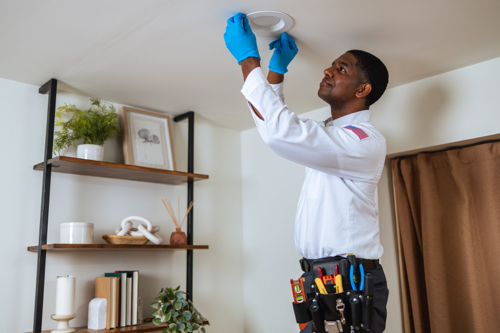
With modern lighting technology, you can customize your fixtures to include options such as dimmers to adjust brightness, timers to regulate when you want your lights to turn on and off and motion sensors that turn lights on when they detect movement.
All these features can contribute even more to your energy savings. As an added bonus, a dimmable feature allows you to produce the ideal ambiance for a particular area. For example, you can dim the lights to create a warm, cozy atmosphere in a living or dining area or increase the brightness in a kitchen or work area.
Some contemporary lighting fixtures even allow you to remotely control your lighting via smart-home technology.
LED Lighting = Eco-Friendly
LED bulbs are not only energy efficient, but they’re also environmentally friendly. Because they last longer, they don’t need replacing so often, resulting in less waste from both production and disposal. In addition, many modern bulbs are recyclable.
Contact Mister Sparky for Your Lighting Installation Needs
You’re ready to install new light fixtures in your home. Maybe you’re tempted to try some do-it-yourself project that you’ve heard advertised on the radio or TV. Don’t compromise your or your family’s safety by attempting a DIY installation.
Our licensed electricians will professionally install your new light fixtures so that you can be assured the project has been done safely, efficiently and customized within your budget. Pay no attention to the fly-by-night cheap job offers. Don’t put up with any malarkey, call Mister Sparky.